
For the most up-to-date Jarvis Cutting Tools ISO Document, click on the image to download the PDF.
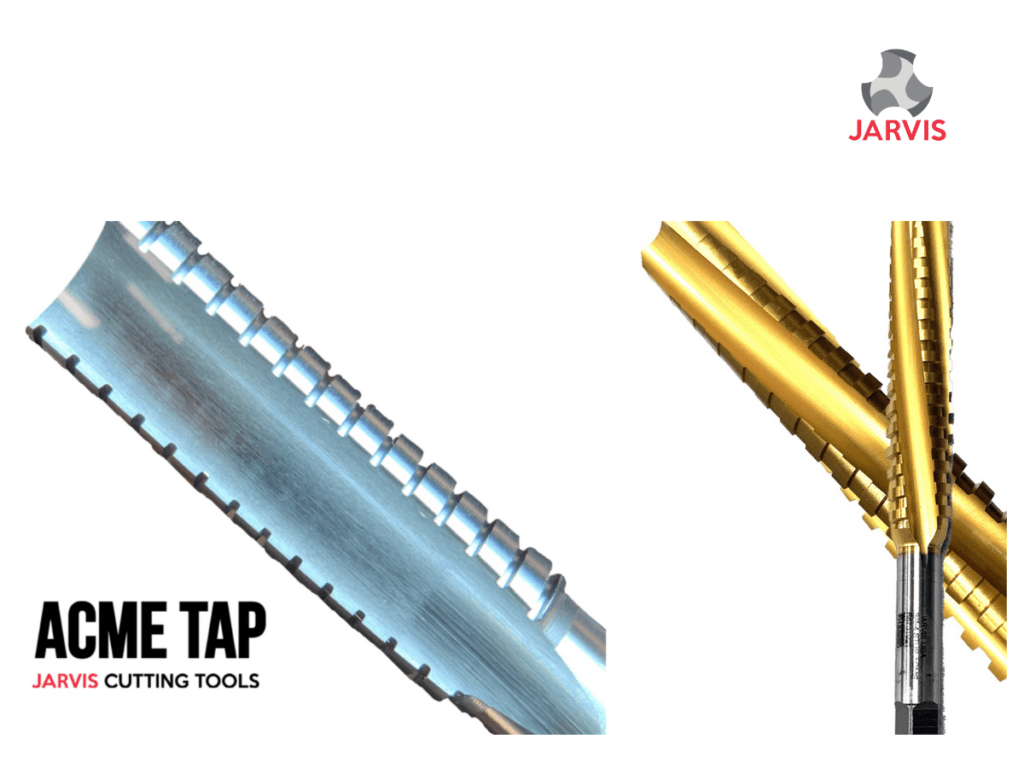
Acme threads, which emerged in the 1890s as a replacement for square threads, have evolved into a powerhouse for traversing motions on machines and tools. Rolled Threads Unlimited, with over 400 sets of acme thread rolling dies, stands at the forefront of acme thread manufacturing, offering a range of materials from carbon steel to nickel alloys.
The three types of Acme screw threads—General Purpose, STUB-Acme, and Centralizing—serve various needs. General purpose threads ensure interchangeability, STUB-Acme threads are tailored for smaller spaces, and Centralized threads prevent wedging on the flanks. The 29-degree angle of acme threads makes them broader, stronger, and squarer than standard V-shaped threads.
Acme threads reign supreme in the United States, favored for applications demanding heavy torque and power transmission. Jack screws, lead screws, CNC systems, lathes, milling machines, and presses all benefit from the superior wear properties, load capabilities, and tolerances of Acme threads.
Rolled Threads Unlimited’s expertise extends to various Acme forms, covering pitches from 2 to 32 and diameters ranging from .0625″ to 7.00″. With profiles like General Purpose, Centralized, and Stub, they adhere to ANSI/ASME B1.5 and ASME/ANSI B1.8 specifications, offering 2C, 2G, 3C, and 3G classes with multiple leads.
As Acme threads continue to dominate the industrial landscape in the U.S., Rolled Threads Unlimited remains a key player, ensuring precision, durability, and optimal performance in every thread produced. In our detailed blog, dive deeper into the realm of acme threads and explore the nuances that set them apart from their European counterpart, the trapezoidal thread.
HISTORY OF ACME THREADS
Acme threads emerge as the unrivaled choice for power transmission, heavy loads, and impeccable wear resistance. Rolled Threads Unlimited’s commitment to excellence makes it the go-to source for all things Acme, offering a seamless blend of tradition and cutting-edge technology.
In the late 1800s, a transformative shift occurred in threading technology, leading to the birth of ACME threads. This innovation emerged as a response to the shortcomings of square threads and the time standard, which proved inadequate for demanding applications.
Origins and Strength:
ACME threads, characterized by a unique 29-degree thread angle, quickly gained prominence for their strength and durability. This distinctive feature sets them apart, making them ideal for heavy-load applications. The development of ACME thread diameters and pitches was intricately tied to Imperial units, adding to their historical significance.
Trapezoidal Threads on the Horizon:
Around the same period, trapezoidal threads made their debut. Noteworthy for their 30-degree thread angles, these threads became prominent in Europe, where the metric system prevailed. Meanwhile, ACME and trapezoidal threads might not be directly interchangeable due to size variations, manufacturing tolerances, and consistent threads per inch, which allow for potential interchangeability.
Choosing Between ACME and Trapezoidal Threads:
The crucial question arises: “Where were the parts manufactured and/or sold?” ACME threads are well-suited for applications in the U.S. and other countries using the Imperial system. In contrast, trapezoidal threads find preference in European contexts. Understanding the historical context and regional specifications guides the selection between these threading options.
As we unravel the history of ACME threads, their evolution is a testament to the continuous quest for threaded solutions that meet the ever-evolving demands of industrial applications.